|
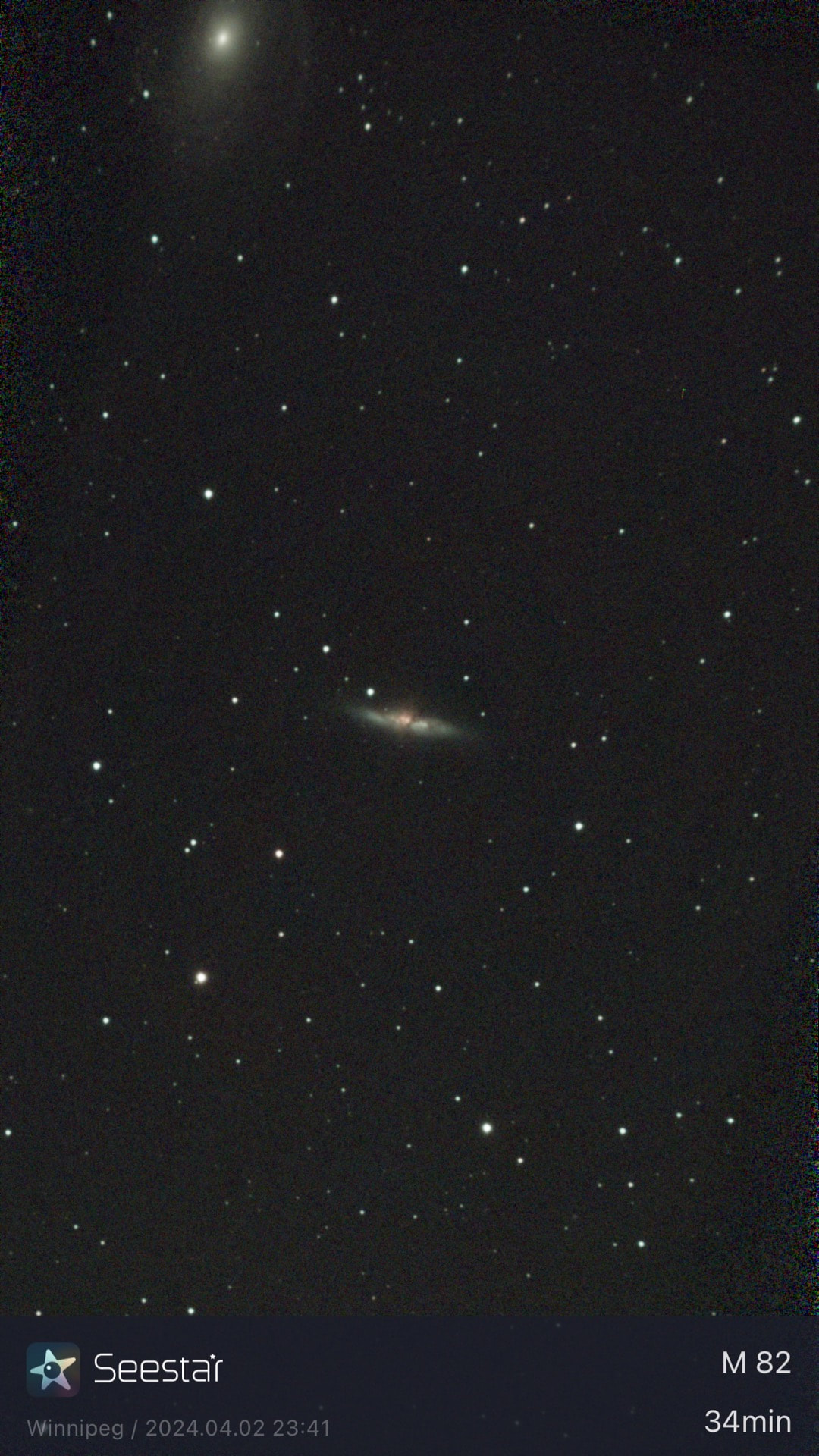
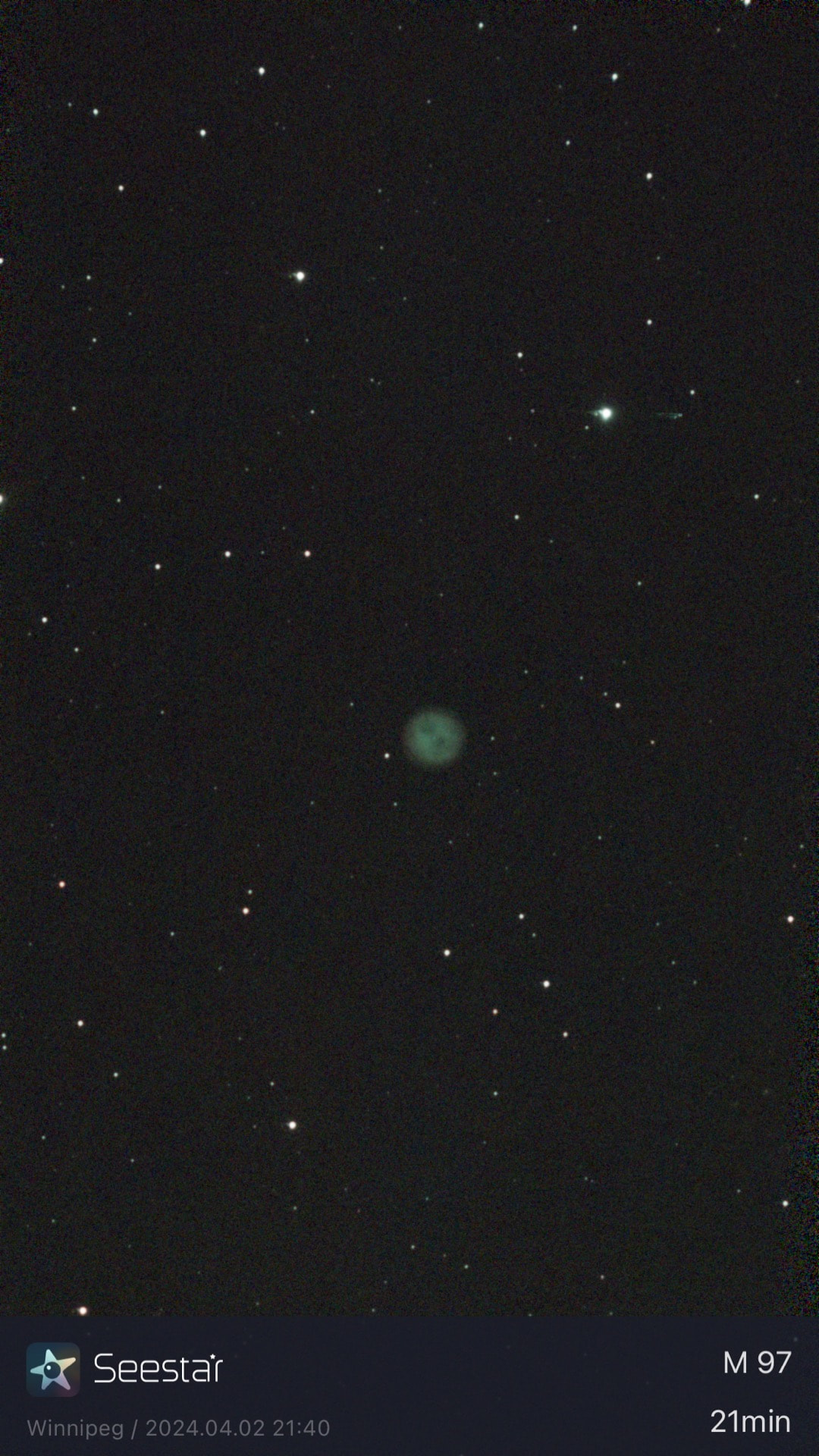
On April 8th, 2024, Winnipeg, Manitoba, witnessed a partial solar eclipse with a maximum obscuration of 53.64%. Despite cloudy skies, the event captivated Winnipeggers. As a passionate observer living in Winnipeg, I had the opportunity to witness this phenomenon. The Unveiling of the EclipseThe eclipse began its subtle initiation at 12:54 pm CDT, with the moon starting to cover the sun from a direction of 167° and an altitude of 47.0°. The peak occurred at 2:01 pm CDT at 191° and an altitude of 47.2°. The gradual retreat of the moon’s shadow continued until the partial eclipse ended at 3:08 pm CDT. By then, the alignment shifted to 214° and an altitude of 43.0°. A Glimpse Through the LensArmed with my SeeStar S50, I captured key moments of the eclipse. Below are two groups of photographs highlighting the peak and final moments of the eclipse, showcasing the moments when the moon and sun played a fleeting game of tag in the sky. The Eclipse at Its Peak Taken during maximum obscuration. The Closing Moments Captured at the end of the eclipse. Stellar Exploration Before the EclipseIn anticipation of the eclipse, the evening of April 2nd to the morning of April 3rd was spent in diligent observation and photography of the night sky. With my SeeStar S50, I captured the beauty of four Messier objects, all located in the constellation Ursa Major (aka Big Dipper).
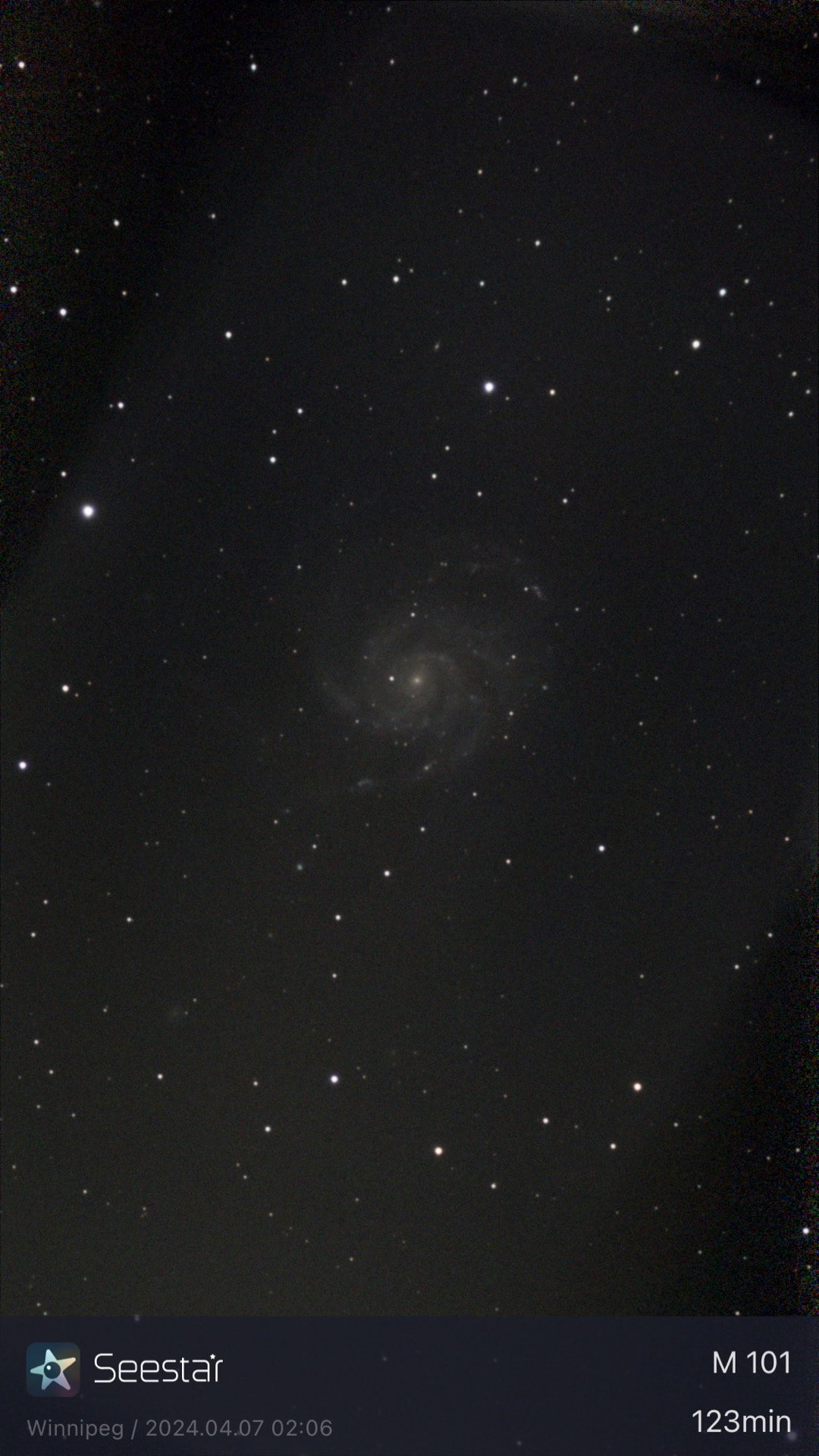
The Night Before: Capturing the Pinwheel GalaxyMotivated by my earlier observations, I set out to capture a great image of M101 (another Messier object in Ursa Major) on April 7th, the night before the eclipse.
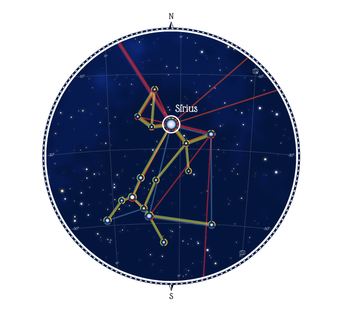
 Location of observed Messier objects in Ursa Major. A Cosmic JourneyThe partial solar eclipse of 2024 provided a unique opportunity for celestial observation and photography. Coupled with the preceding nights spent capturing the beauty of distant galaxies and nebulae, it was an unforgettable experience that underscored the wonders of our universe. For more details and insights into the equipment used during these observations, visit the 'My Gear' page under the 'Astronomy' section of my website, recently completed to share information about my gear and what qualities I value most with fellow astronomy enthusiasts. Maximum obscuration, times, direction, and altitude data from Time and Date.
0 Comments
The ‘stress bucket’ metaphor provides an insightful way to conceptualize stress management. Picture a bucket that is filled drop by drop with everyday stressors. Whether they are minor daily annoyances or major concerns, each one contributes to the rising water level in our metaphorical bucket. When the stress accumulates beyond a certain point, it can lead to feeling overwhelmed, much like a bucket spilling over. However, just like a real bucket, there are ways to let some water out to prevent it from overflowing. These are our coping mechanisms—relaxation techniques, physical activity, social interactions—that release stress. The goal is to balance the stress we experience with our relief activities, keeping our stress levels manageable. Let’s apply the ‘stress bucket’ metaphor to the management of stress in the role of a library manager. Imagine the librarian's day as a bucket, each task and responsibility adding a drop of stress. In an environment where a balance between maintaining library operations, serving the community, and leading a team is vital, the stress bucket can fill up quickly. Daily Stress Accumulation
Overflowing Stress in Management
Creating Holes for Relief
 Generated with DALL·E. Strategies for Equilibrium in Library Leadership Navigating the delicate equilibrium of stress influx and release is crucial for a library manager. Cultivating a nurturing work climate and initiating engaging library initiatives can function as proactive measures in the modulation of stress, effectively creating more avenues for stress to dissipate. Constructing a cohesive team that leverages individual strengths and collectively champions each other's interests is another key strategy in achieving balance. Harnessing the ‘Stress Bucket’ for Effective Library ManagementLeadership in library management involves recognizing that while not all stress can be eradicated, it can be managed. It's less about eliminating every stressor and more about managing the volume within the bucket. Knowing when to patch the holes and when to address the downpour. To wrap up, the ‘stress bucket’ metaphor serves as a powerful tool for library managers to visualize and control stress. It advocates for a proactive approach to managing both personal and professional pressures. By adopting strategies that foster organizational efficiency and encourage personal well-being, library managers can keep their stress levels in check. This, in turn, leads to leading by example and creating a positive, productive library environment for all.  Generated with DALL·E.
As a newly appointed Branch Head Librarian in a bustling city library, and with prior experience as a Manager of Technology and Collections in a smaller community, I've learned that one of the most crucial aspects of stepping into a new leadership role is getting to know your team. Understanding the individuals you work with is the cornerstone of fostering a collaborative, supportive, and innovative work environment.  Generated with DALL·E. Here's how you can embark on this essential journey: Staff Assignment: A Window into Your Team's WorldThe ‘Staff Assignment’ serves as your initial glimpse into the daily responsibilities and work-life of your team members, providing a structured opportunity for them to share insights about their roles, utilized tools, and perceptions of the library's operations. This exercise not only deepens your understanding of the library's complexities but also fosters discussions around possible enhancements and innovations. The assignment should instruct staff to summarize their primary duties and responsibilities, including details about specific software, apps, processes, or procedures critical to their everyday tasks. Ensuring the assignment's accessibility is crucial to encourage participation and elicit meaningful responses. You should allow your staff to choose their submission method—be it handwritten or digital—and offer flexibility with deadlines as being new you likely do not possess a full picture of the distribution and level of workload. The manner in which staff opt to submit their assignments can also offer valuable insights into their comfort with technology and preferred working styles. One-on-One Meetings: Beyond the SurfaceNext is scheduled personal meetings with every member of your team. These allow you to connect on a more personal level and understand the unique perspectives and contributions of each team member. This is the time to explore their passions, strengths, and areas where they seek growth. Provide equal time for every initial meeting, foster a sharing atmosphere, and be casual. There will be ample opportunity for followup meetings later. Tip: For your initial one-on-one meetings with staff I recommend focusing on personal interests, passions, and the historical development of the library throughout their tenure. Encourage an engaging conversation around these three key points:
Casual conversations, the unseen glue of team dynamics and a daily occurrence, should ideally flow smoothly, embracing the natural ebb and flow of unstructured interactions. These moments, characterized by their spontaneity and allowance for mistakes, necessitate humility and a willingness to occasionally engage in lighthearted silliness. It's crucial not to underestimate the impact of these unplanned exchanges, often occurring in the break room or during brief encounters in the stacks or work room. They serve as windows into personal interests, hobbies, frustrations, and aspects of team members' lives outside of work, thereby nurturing deeper connections and fostering an environment of mutual respect. Discovering Passions and StrengthsRemember that your team consists of individuals, each with their own lives and aspirations. As you interact with them, make it a point to uncover what truly motivates them. Ask yourself, what parts of their job spark their excitement? Identifying these passions is key to aligning their tasks with what they genuinely enjoy, which in turn can significantly enhance both their job satisfaction and overall productivity. Identifying Areas for DevelopmentRecognizing areas for development is as crucial as understanding strengths, and these discussions should be approached with empathy and a focus on growth. Emphasize opportunities for enhancing skills and provide the necessary resources for improvement. By exemplifying the introspection and behaviours you hope to see in your team—such as learning new things, acknowledging your own weaknesses, and seeking feedback—you can set a powerful example. This not only encourages your team members to embrace similar behaviours but also helps to reduce fear and anxiety associated with acknowledging and working on one's own areas for improvement. Team Meetings: Group DynamicsIf possible in your leadership role, it's beneficial to establish regular team meetings to keep your staff informed, solicit feedback, encourage dialogue, nurture ideas, monitor group dynamics, and stay updated on project progress. Initially, I suggest the first one or two meetings avoid focusing on project-related or potentially stress-inducing topics for staff members. Instead, use these initial gatherings to acquaint yourself with your team, observe their interactions, and cultivate relationships. Employing icebreaker games during these early meetings can be an effective strategy to create a conducive atmosphere for building rapport and fostering a positive team environment. Icebreaker Games: Building Team CohesionIntroducing fun, engaging icebreaker activities can work wonders in breaking down barriers and building camaraderie among team members. Simple games that encourage sharing of personal stories or quirky facts can lighten the atmosphere and make everyone more comfortable. Some ideas for icebreakers activities include the ‘Trial by Trolley’ board game, True Colours test, and the Myers–Briggs personality test.  Active Listening: The Foundation of TrustListening attentively to your team's insights, concerns, and suggestions without judgment is crucial. It not only helps in identifying areas for improvement but also establishes you as a leader who values their team's input and wellbeing. Be upfront, honest, and straightforward with your team. This establishes a foundation to build trust. Remember it is easier to share with someone who is willing to share back and it is easier to share with someone who is genuine and being their true self. Your Team as a Repository of KnowledgeView your team members not just as employees but as invaluable sources of knowledge about the organization and the community you serve. Teams are likely to possess decades of experience and these collective experiences can contribute greatly to strategic decisions and coming up with innovative solutions. In ConclusionGetting to know your team is an ongoing process that extends beyond the initial days of your new role. It requires patience, openness, and genuine interest in their well-being and professional growth. As you embark on this journey, remember that the strength of your library lies not just in its collections but in the people who bring it to life. Through understanding and supporting each other, you can collectively enhance your library's value to the community and foster an enriching workplace for all.  Generated with DALL·E.
The cosmos has always fascinated humanity, from ancient astronomers gazing at the stars to modern scientists exploring the universe with cutting-edge technology. For those of us who can't launch into space ourselves, astronomy-related YouTube channels offer a window into the vastness and beauty of the universe. Highlighting the current selection of ‘Recommended Astronomy-Related YouTube Channels’ I’ve curated and featured in the Astronomy section of this site, here's a list that will take you on a journey through the cosmos, each with its unique perspective on space exploration and science.  Generated with DALL·E. AstrumAstrum is your go-to channel for diving deep into the mysteries of our Solar System. With a series of videos dedicated to each planet, this channel answers burning questions about the size of the Solar System, the celestial bodies that orbit our Sun, and why space exploration should matter to us. Through stunning visuals from probes and spacecraft, Astrum brings the beauty of space right to your screen.  Canadian Space AgencyThe Canadian Space Agency (CSA) channel is a treasure trove of information for those interested in the advancements of space through science. Coordinating all civil, space-related policies and programs, CSA's channel offers insights into how space science and technology are benefiting society and contributing to the knowledge of space.  Crash Course AstronomyPhil Plait, also known as The Bad Astronomer, takes viewers on an educational journey through space in this Crash Course Astronomy series. This playlist is perfect for those looking to understand the basics of astronomy in an engaging and accessible format.  European Space Agency, ESAThe ESA channel is your European gateway to space. With a mission focused on the peaceful exploration and use of space, the ESA channel offers clips showcasing Earth, the Universe, and significant space events. This channel is a testament to the collaborative spirit of space exploration.  Event HorizonHosted by John Michael Godier, Event Horizon is a narrative-driven show focusing on science, astronomy, and space science. With special guests and a variety of topics, this channel explores the latest in space science and technology, making complex subjects accessible to a wider audience.  Hubble Space TelescopeManaged by the Space Telescope Science Institute, this channel offers a glimpse into celestial phenomena revealed by the Hubble Space Telescope's advanced technology. From exploring age-old questions about the universe to sharing the beauty of celestial discoveries, the Hubble Space Telescope channel is a gateway to the wonders of the cosmos.  HubbleESAFor the latest videos from the ESA/Hubble collaboration, the HubbleESA channel is a must-visit. This channel features stunning visuals and updates from one of the most iconic space telescopes in history, bringing the universe closer to home.  Isaac ArthurFocusing on futurism and space exploration, Isaac Arthur's channel explores scientific concepts within the realm of known science and major theories. This channel is perfect for those who love to blend science with a touch of science fiction, offering a thoughtful look at the future of space exploration.  KosmoKosmo is an exciting channel for those with an inquisitive mind, eager to learn more about the mysteries of our infinite universe. From the riddles of space to the possibilities of other worlds, Kosmo invites viewers to ponder the vastness of the cosmos.  Learn the SkyJanine, the creator of Learn the Sky, shares her passion for astronomy by teaching viewers how to identify constellations, stars, and celestial objects. This channel is a blend of science and mythology, perfect for stargazers of all levels.  NASANASA's official YouTube channel offers an inside look into the agency's mission to pioneer the future in space exploration, scientific discovery, and aeronautics research. With a history spanning over six decades, NASA's channel provides unparalleled access to the latest in space exploration and discoveries.  PBS Space TimeHosted by astrophysicist Matthew O’Dowd, PBS Space Time explores the outer reaches of space and the complexities of astrophysics. This channel is ideal for those looking to dive deep into the scientific theories and possibilities that stretch beyond our planet.  SEAThe SEA channel offers a relaxed approach to exploring all things space-related. From the latest space news to deep dives into unsolved mysteries, this channel provides a laid-back way to satisfy your curiosity about the cosmos.  SpacedockFor fans of science fiction, Spacedock is the perfect channel to explore the specifications, history, and lore of fictional spacecraft. This unique blend of reality and fantasy offers a creative look at the possibilities of space travel.  SpaceRIPSpaceRIP delivers both long and short videos on astronomy and related topics, providing viewers with a broad range of content to explore the universe and its wonders.  V101 ScienceV101 Science combines powerful visuals with mysterious music to explore intriguing science topics. For those wondering about the conditions inside Jupiter or the secrets of the universe, this channel offers visually captivating and informative videos.  Each of these channels offers a unique perspective on astronomy and space exploration, making the vastness of the cosmos more accessible and understandable. Whether you're a seasoned astronomer or just starting to explore the night sky, these YouTube channels are sure to spark your curiosity and expand your knowledge of the universe. In the vast expanse of the internet, where information is as limitless as the stars in the night sky, finding great resources can be as challenging as identifying a distant galaxy. Whether you’re an aspiring astronomer or simply captivated by the night sky, the right tools and knowledge can expand your understanding and significantly enhance your next stargazing adventure. Here, I'm highlighting the current selection of ‘Great Astronomy Links’ I’ve curated and featured in the Astronomy section and Links pages of this site. These stellar resources stand out for their value, usability, uniqueness, and the sheer excitement they bring to the astronomical community. Aladin is an interactive sky atlas that is both educational and engaging. By allowing users to visualize and analyze astronomical images and data, Aladin bridges the gap between amateur astronomy enthusiasts and the professional astronomical community. Its intuitive interface makes it accessible to users of all skill levels, inviting a deeper exploration of the night sky. 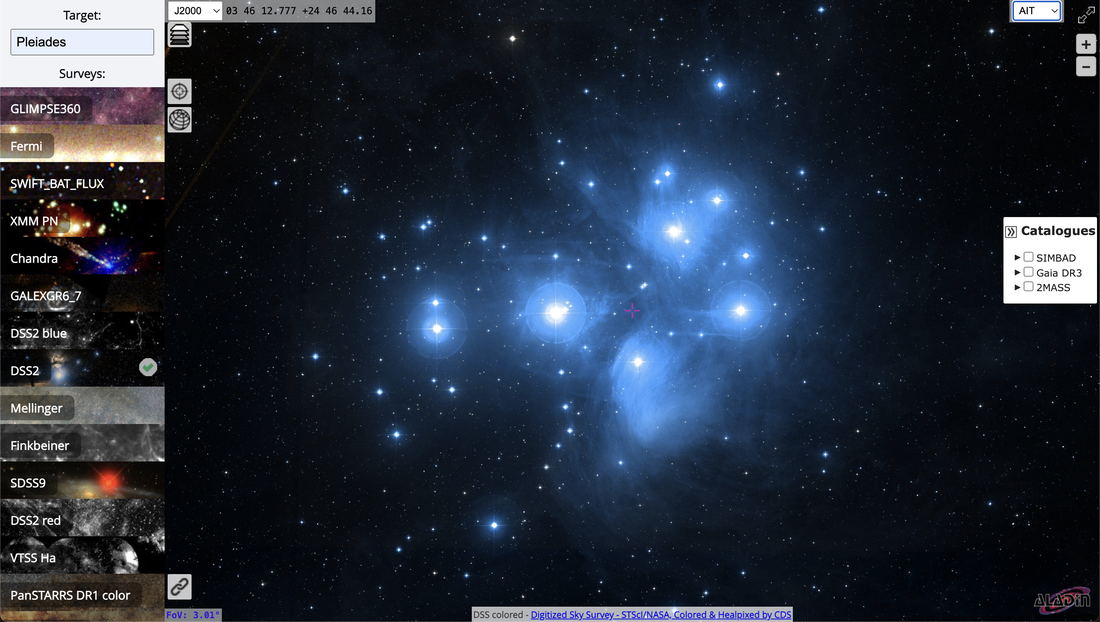
Astronomy Cast takes listeners on an auditory voyage through the cosmos. Hosted by Fraser Cain and Dr. Pamela L. Gay, their fact-based discussions make complex astronomical concepts accessible, enriching your knowledge and passion for the universe with each episode.  Astronomy Tools offers a collection of free tools for the astronomer, including Field of View and other calculators, star charts, sky and atmospheric conditions, and lookup coordinates. These tools enhance the stargazing experience, making it easier to plan observations, track celestial events, and understand the night sky. Valuable companions for night-time expeditions.  CosmoQuest is a community of astronomers and astronomy enthusiasts who connect via podcasts, streams, forums, and chats. CosmoQuest aims to foster a community of citizen scientists and encourages people to ask themselves the question: How do you want to explore our Universe? 
Lynkeos is a specialized tool for processing astronomical images on Mac OS X. For those who capture the night sky through a telescope and webcam, Lynkeos simplifies the post-processing of images, making it easier to unveil the beauty and detail of celestial objects.
Our Galaxy provides a 3D atlas of the Milky Way, offering a unique perspective on our cosmic neighbourhood. This tool enhances our understanding of the galaxy's structure, helps us visualize the locations and physical properties of deep sky objects, and assists us with comprehending our place within it. Dive into the heart of a vibrant astronomical community with the Royal Astronomical Society of Canada (RASC). Established in 1868, the RASC is a cornerstone for enthusiasts of all levels, offering a constellation of local centres across Canada. These centres are the gathering grounds for regular meetings where members share insights, learn from one another, and fuel their passion for the cosmos. The society is renowned for its star parties, enchanting events that bring the community together under the vast, starlit sky for unforgettable nights of observation and camaraderie. Whether you're just starting your celestial journey or are a seasoned stargazer, the RASC website is your portal to a universe of knowledge, connection, and the shared joy of astronomy.
Sky Maps offers high-quality digital star charts for educators, publishers, and enthusiasts. These maps are indispensable for navigating and appreciating the night sky's splendour. The Evening Sky Map - February 2024 - Skymaps.com SPACE.com is the go-to destination for news in the realm of astronomy and space exploration. This site is a vibrant hub for anyone eager to keep a pulse on new discoveries, skywatching events, and advancements in space technology. Stellarium is free, open-source planetarium software that transforms your computer into a window to the cosmos. With a realistic 3D sky and a wealth of features, it's an exceptional tool for educators, students, and anyone mesmerized by the stars.  The Awesome Amateur Astronomer provides a guide for beginners by laying out ten practical steps to get started in astronomy. This resource demystifies the initial challenges of stargazing, providing a clear path for newcomers to the hobby.  Generated with DALL·E. Each of these resources, with its unique offerings, weaves together a tapestry of knowledge and exploration that enriches our understanding of the universe. From practical tools to enhance your stargazing experience to rich sources of scientific knowledge and cultural insight, this curated selection of links opens up a universe of possibilities. Whether you're an amateur astronomer, an educator, or simply a curious mind, these links invite you to gaze upwards, dream big, and explore the wonders of the cosmos. They offer a pathway to not just observe, but to understand and participate in a vast astronomical community, encouraging us to connect with the night sky and each other in our shared quest for knowledge.
The advent of smart telescopes has revolutionized amateur astronomy, making the wonders of the universe more accessible to everyone. Smart telescopes automatically take and stack images, making the intricate process of capturing the celestial grandeur of the night sky far more accessible to enthusiasts. Gone are the days when a smart telescope required a hefty investment of thousands of dollars. Recent innovations have brought us marvels like the ZWO Seestar S50 and Dwarf II smart telescope, available for under $1000 CAD. These devices, while more limited than their pricier counterparts such as the Unistellar eVscope, provide a solid user-friendly introduction to astrophotography. With the upcoming solar eclipse on April 8, 2024 I recently took the plunge and acquired the Seestar S50 to fill gaps in and expand my observational capabilities. This piece of technology not only complements my existing equipment but also opens new doors to the universe's mysteries. Before delving into this smart telescope, it's crucial for anyone considering a telescope to reflect on how they wish to engage with the night sky. Whether it's star hopping, deep-sky viewing, or planet gazing, the right equipment can significantly enhance your experience. My arsenal includes a Celestron Regal M2 100ED spotting scope and Orion 2x54 Ultra Wide Angle Binoculars. Both are ultraportable and serve a unique purpose. The spotting scope is great for star hopping and viewing the planets. The binoculars (aka constellation binoculars) provide a 36 degree field of view that fully encompasses a constellation and allows you to see about 1.2 magnitudes fainter than you can with the naked eye. This has come in handy at star parties, where I used them to identify locations to set up telescopes for public outreach before the stars and planets were visible to the naked eye. They also provide a more ‘dark sky’ experience in areas with light pollution by enabling viewing of fainter magnitudes. These tools have been invaluable in my stargazing adventures, from casual walks under the stars to camping in beautiful parks to educational sessions at star parties. The Seestar S50 Smart Telescope: A New PerspectiveThe Seestar S50 promises to broaden my view of the cosmos with its ability to capture images of the sun and deep-sky objects such as galaxies and nebulae in a user-friendly and portable package. It boasts a 50mm apochromatic lens, a 250mm focal length, and utilizes a high-quality Sony sensor to capture the cosmos in decent detail. 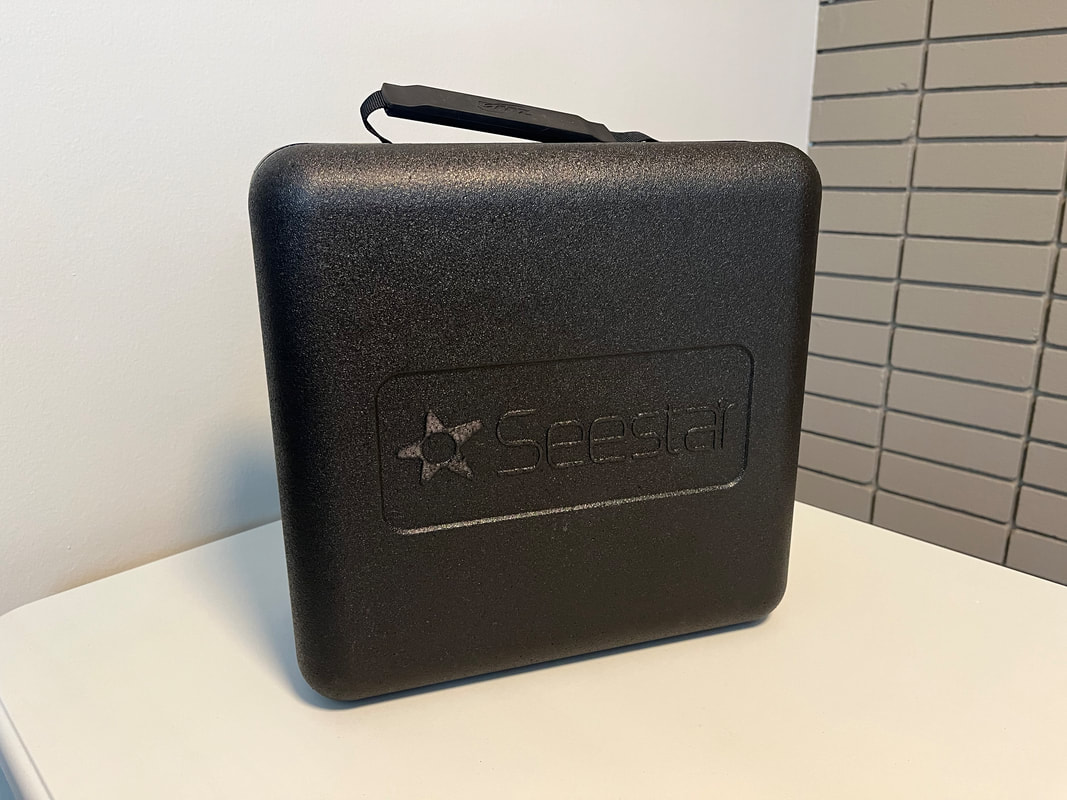 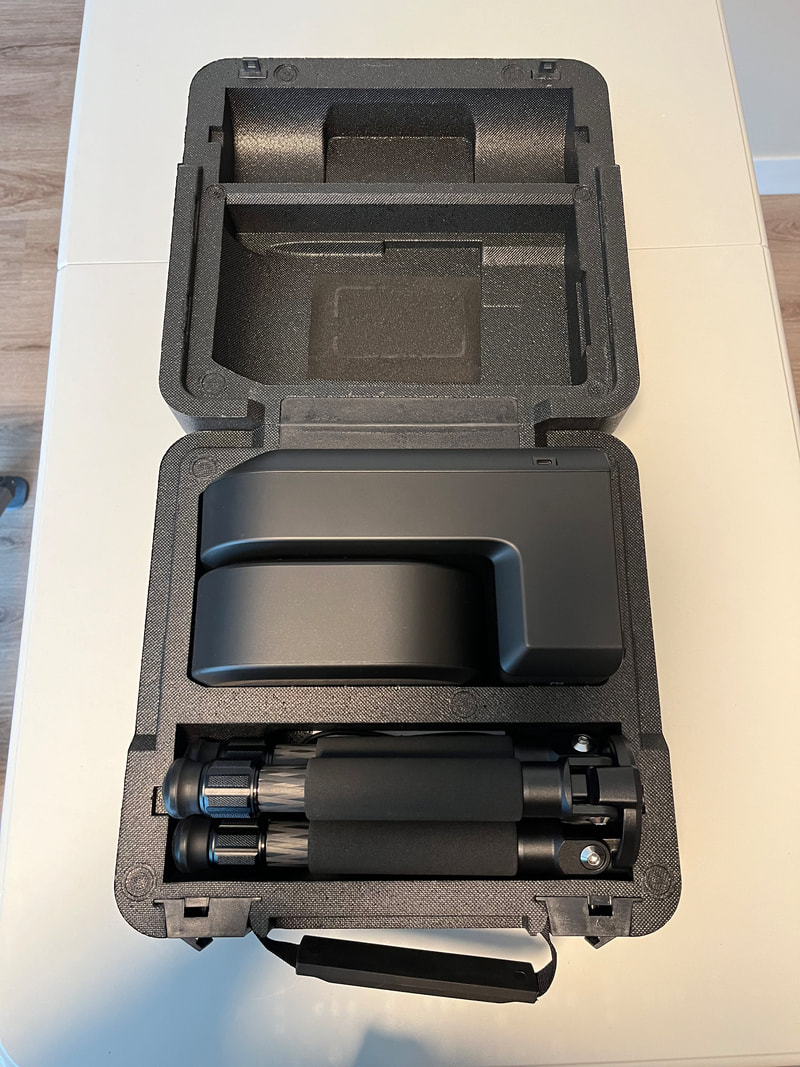 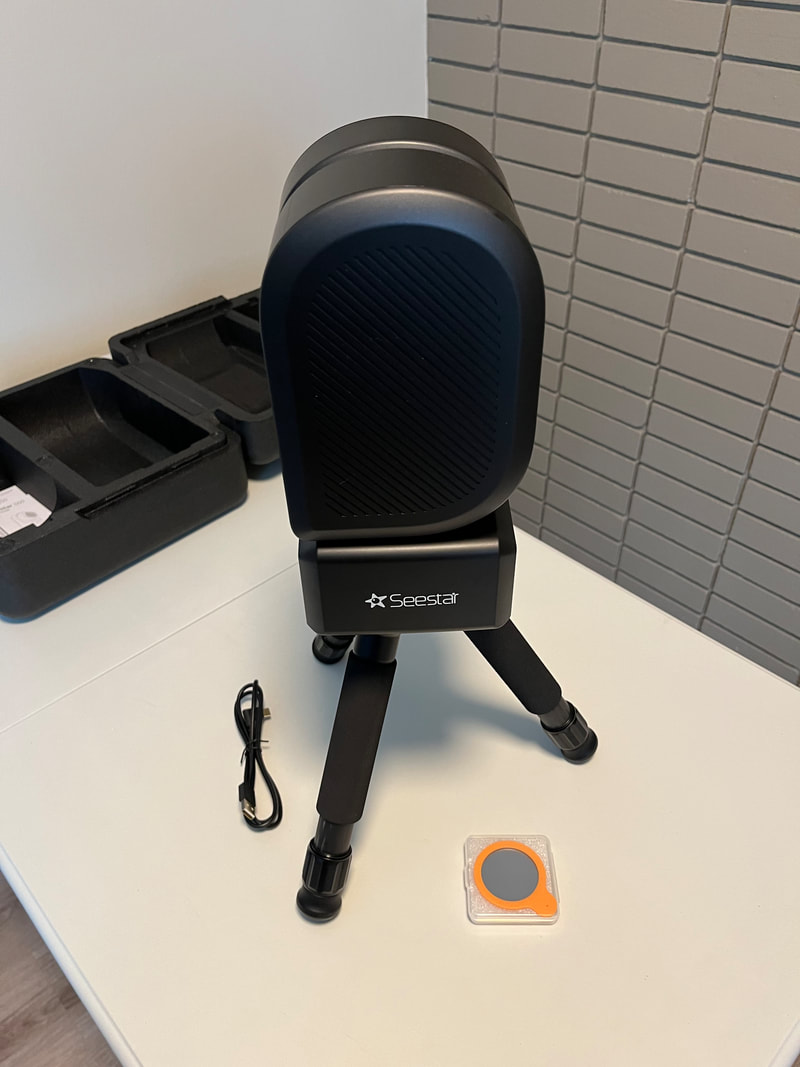 1. Seestar case. 2. Inside the Seestar case. 3. Seestar S50 telescope set up on tripod with charging cable and solar filter. Simplicity and UsabilityThe Seestar S50 is celebrated for its straightforward setup and portability, making it an ideal choice for astronomers of all levels. Setting it up is a breeze—just mount it on the tripod, turn it on, sync it with the app, and you're ready to explore the night sky. This ease of use extends to the app, which guides you through selecting and capturing celestial wonders. Thanks to its compact design, the Seestar S50 can easily accompany you on your adventures, from casual backyard observations to star parties to explorations under the dark skies of remote locations. This portability and convenience makes the Seestar S50 a perfect match for my Celestron Regal M2, allowing for a comprehensive observational experience where deep-sky imaging with the Seestar S50 complements serendipitous explorations with the Celestron Regal M2. 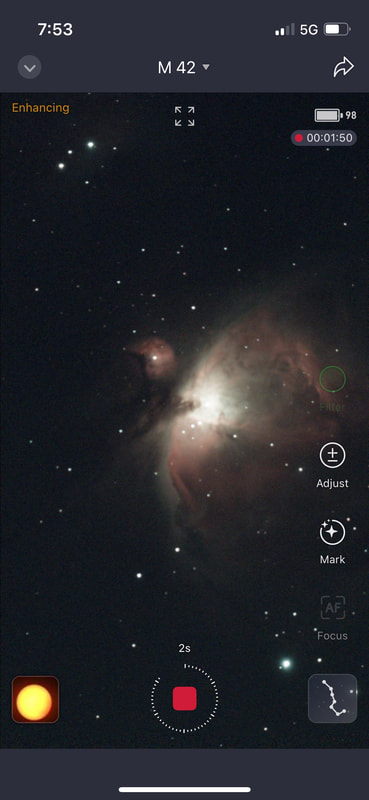 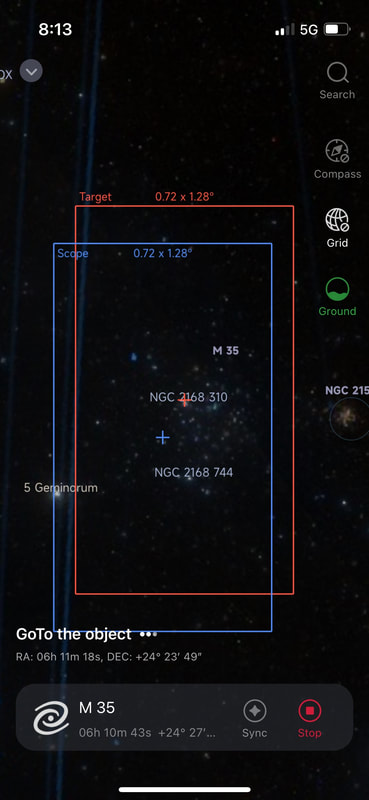 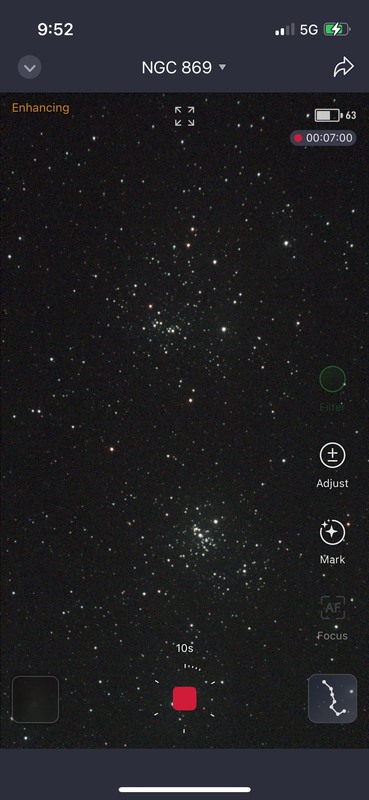 1. Screenshot of the Seestar app acquiring and stacking images of the Orion Nebula. 2. Screenshot of the Seestar app targeting and going to M35. 3. Screenshot of the Seestar app acquiring and stacking images of NGC 869. First Light: Challenges and TriumphsMy initial outing with the Seestar S50 had a minor learning curve. Calibrating the telescope required a delicate balance, quite literally, as I discovered the importance of smooth rotation of the telescope while connected to the tripod. I had initially aimed to keep the telescope level when rotating, but this led to bumps and jolts due to surface friction as the tripod's legs brushed against the surface it was placed on. This minor hiccup aside, the telescope soon proved its worth, effortlessly tracking celestial wonders from the Sun to the Triangulum Galaxy. Despite urban light pollution and a bright moon, the images I captured, including the Orion Nebula and the Double Cluster in Perseus, were a testament to the telescope's capabilities. 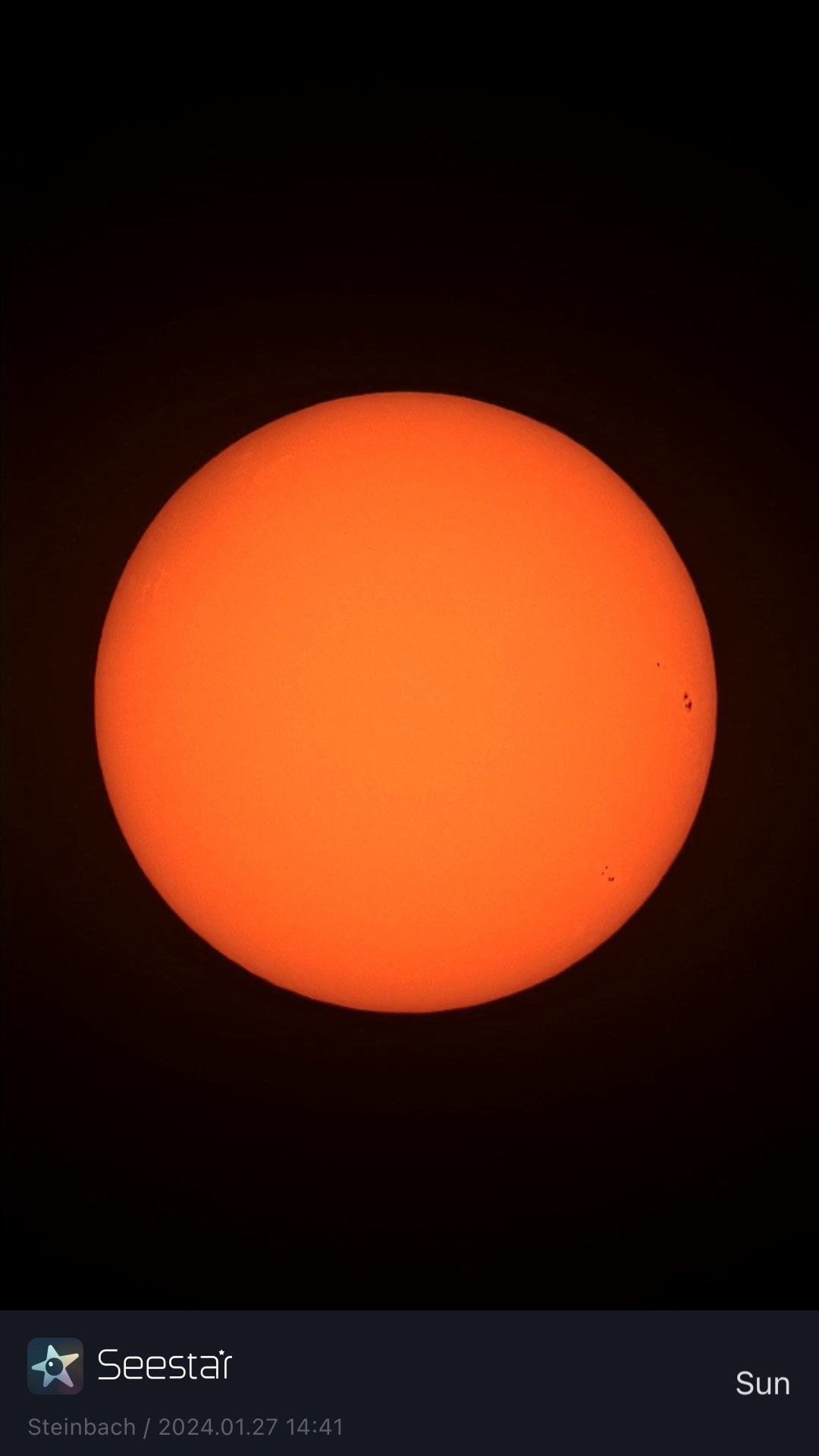 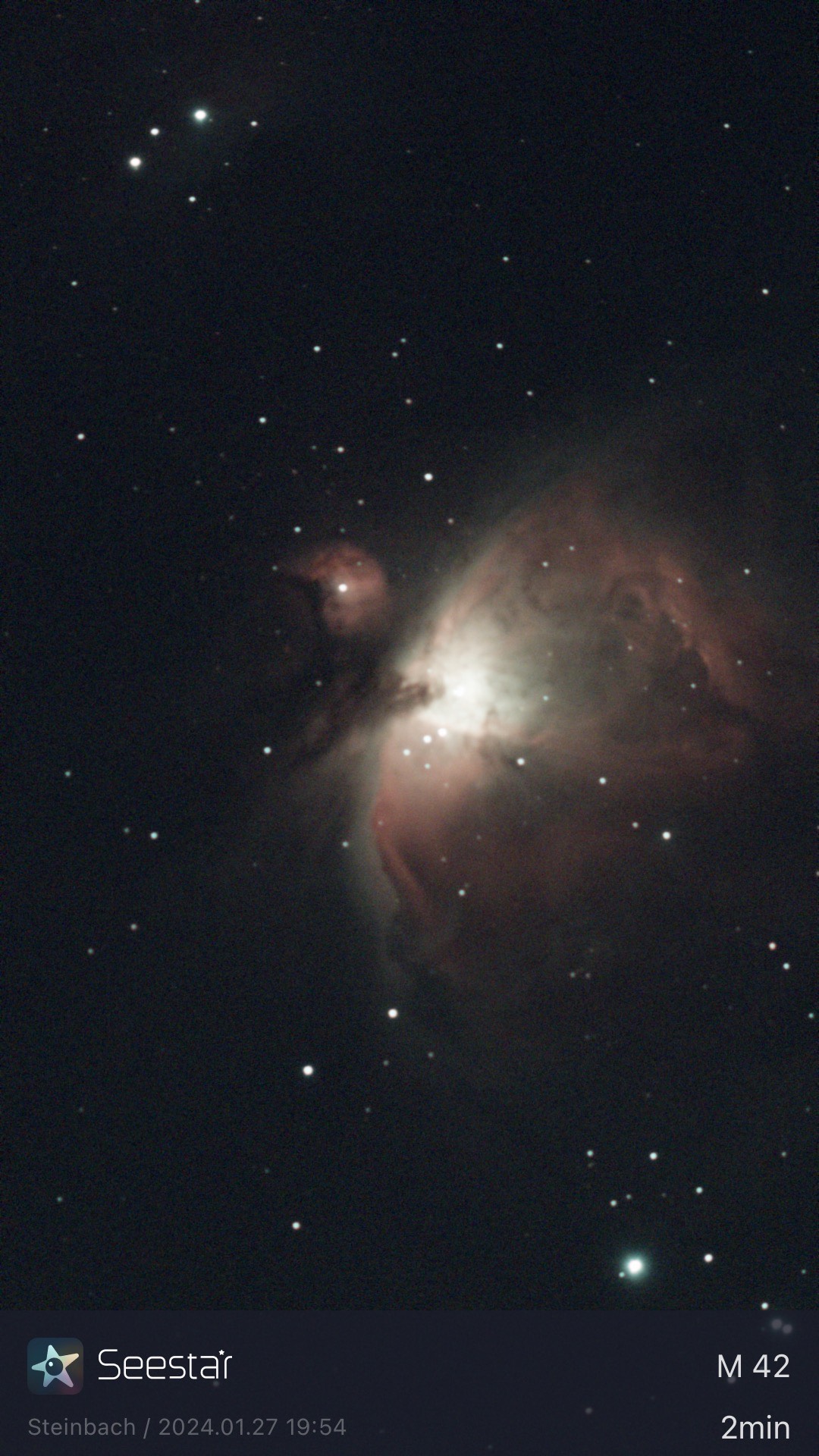 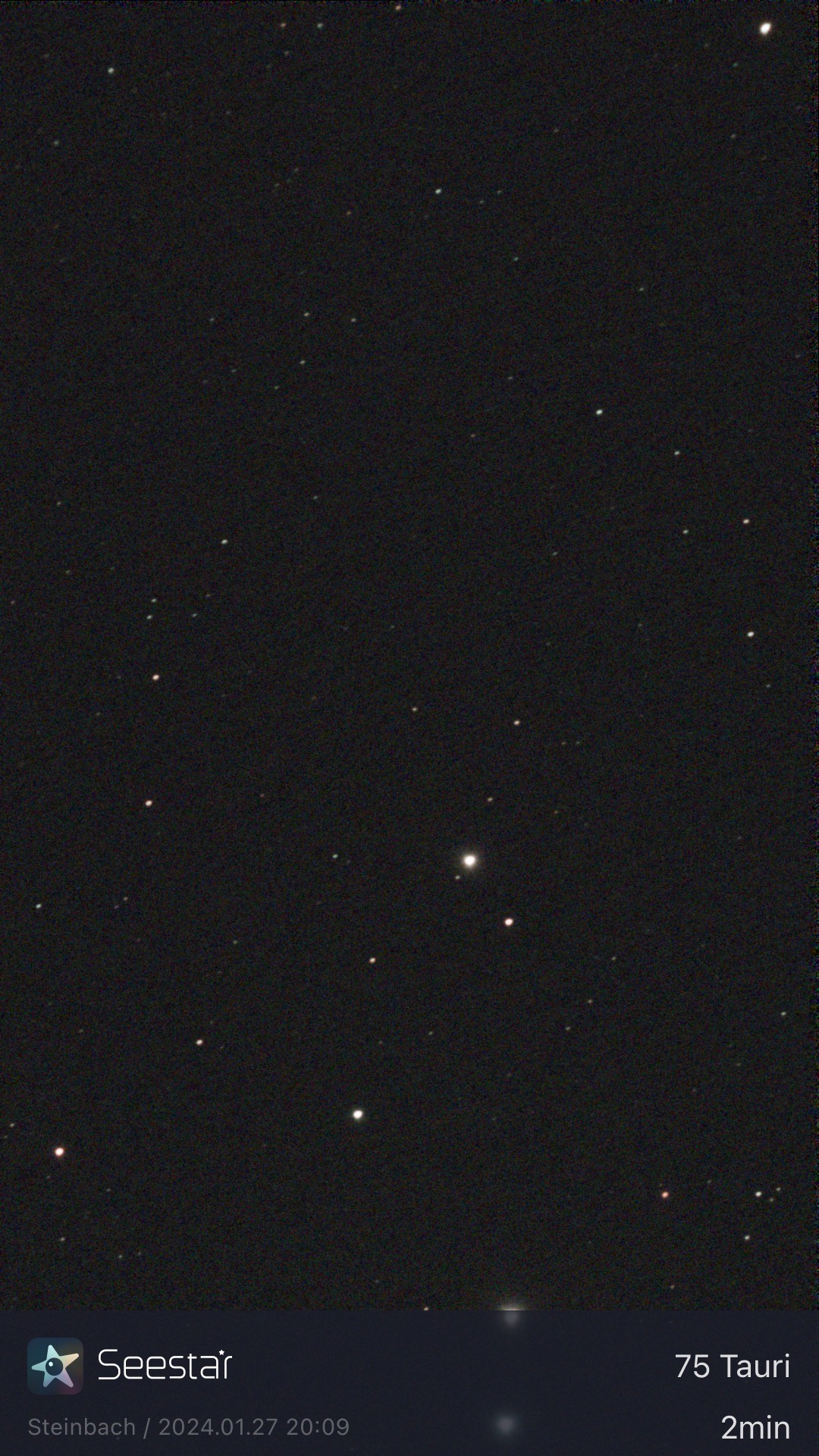 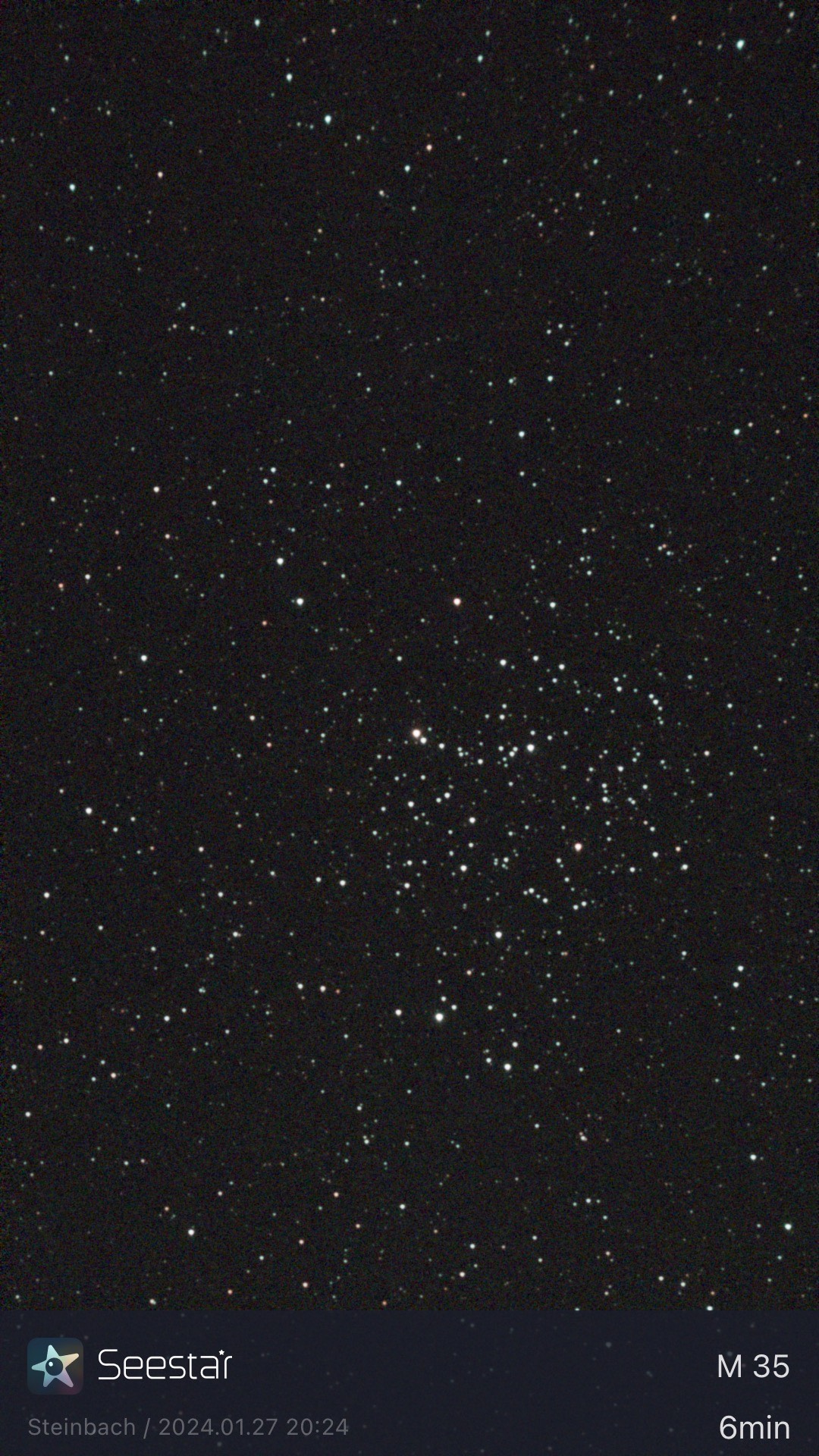 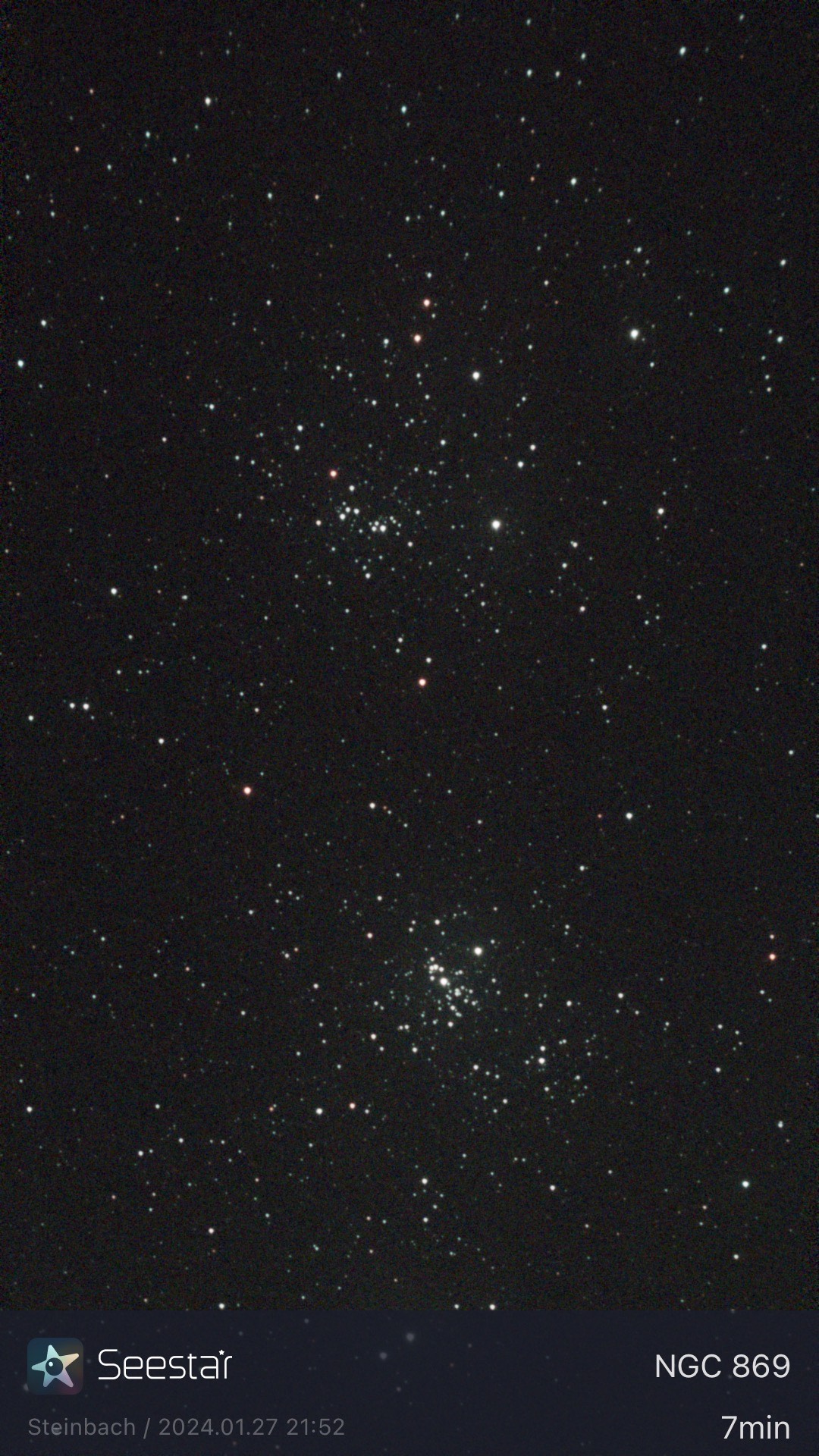 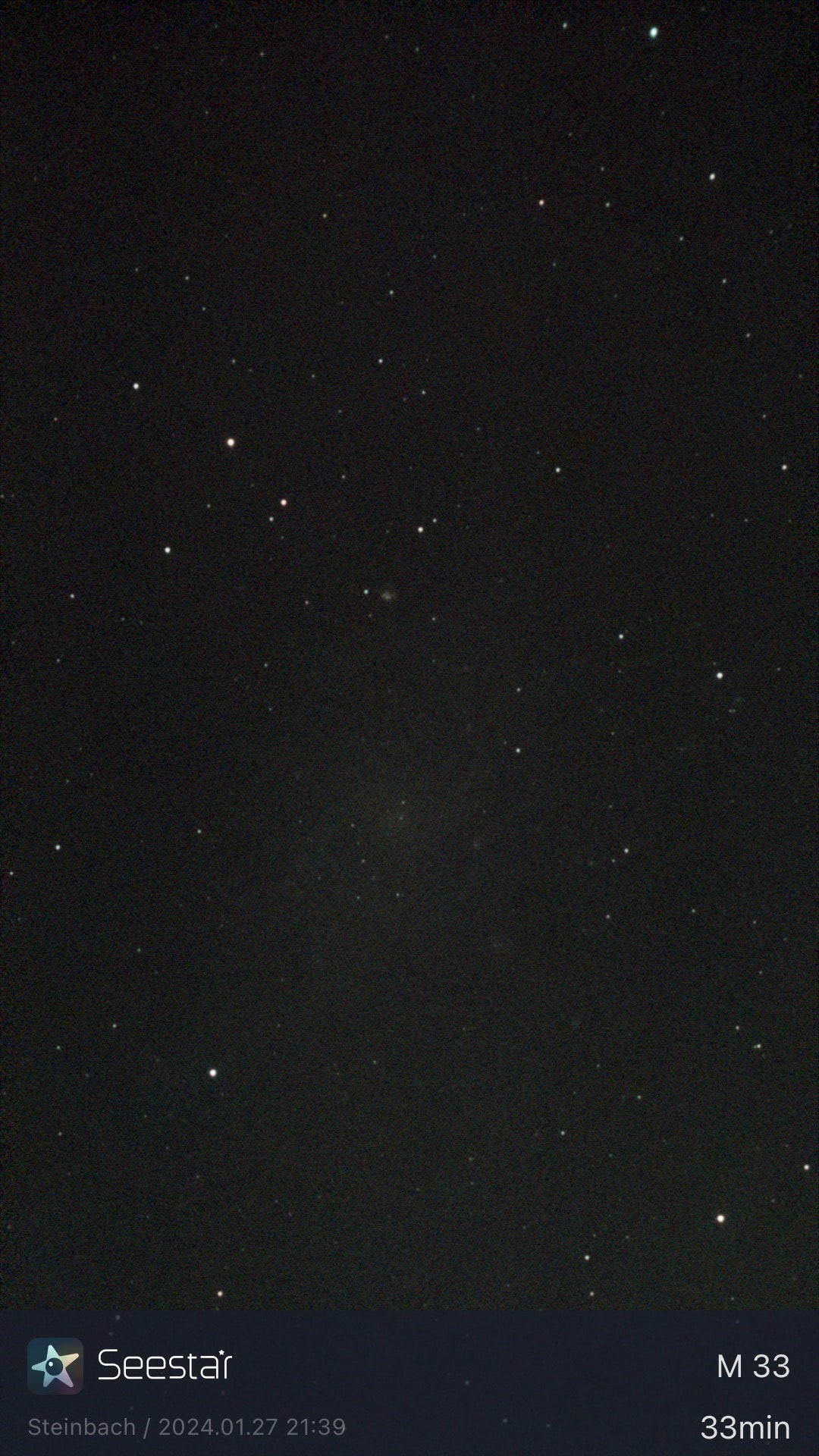 1. Sol (Our Sun) 2. Orion Nebula (M42) 3. 75 Tauri (Orange-Hued Aging Giant Star) 4. M35 (Open Cluster) 5. Double Cluster in Perseus (NGC 869 and NGC 884) 6. Triangulum Galaxy (M33) Public Outreach and ValueThe Seestar S50's value extends beyond personal exploration to public outreach. As highlighted in Urban Astrophotography, this smart telescope is an excellent tool for educational initiatives, bringing the night sky closer to the community and sparking interest in astronomy among people of all ages. Looking AheadMy journey with the Seestar S50 is just beginning. I eagerly anticipate further tests and adventures, especially from dark sky sites and with longer sessions, where the true potential of this telescope can be unleashed. A Note to My ReadersLife has been growing busier, so I am shifting to a biweekly blogging schedule. Mark your calendars for my next post on February 21, 2024.
Over the past month and a half, I've been on quite the journey, racking up nearly 8000 km behind the wheel moving back to Manitoba and celebrating Christmas with family. This long stretch of solo driving provided the perfect opportunity for immersing myself in a rich tapestry of podcasts, music, and, most notably, audiobooks. During this period, I started and finished seven audiobooks, all through the Hoopla app. What sets Hoopla apart, and something I can't help but praise, is its instant, hold-free access to a vast library, making it incredibly convenient for spontaneous listening decisions. It can be very frustrating when you finally decide on your next listen, but find it ensnared in waitlists or hampered by limited availability (e.g. no concurrent checkouts). Additionally, Hoopla enables users to download audiobooks directly to their device. This means I didn't have to worry about using up data or losing entertainment in the vast stretches of Northern Ontario where data and wifi are as scarce as traffic lights. Thanks to Hoopla, what could have been hours of boring monotony transformed into enthralling escapades across the realms of fiction and non-fiction, making every kilometer an adventure. Below are the seven audiobooks I enjoyed, accompanied by my ratings and reviews from GoodReads. ‘Dogs of War’ by Adrian Tchaikovsky - 5/5Adrian Tchaikovsky's 'Dogs of War' is a standout science fiction novel that brilliantly combines exciting adventure with deep philosophical themes. Centring on bioforms, genetically engineered animals designed for combat, the story delves into their struggle for identity and place in society. Tchaikovsky skillfully explores the ethical implications of biotechnology in warfare, challenging readers to consider the consciousness and moral standing of these beings. Both fun and intellectually engaging, 'Dogs of War' is a compelling read for those interested in the intersection of advanced science and societal impact.  ‘Double Star’ by Robert A. Heinlein - 4/5'Double Star' by Robert A. Heinlein is a captivating science fiction novel. The story revolves around an actor's intricate task of impersonating a prominent politician. The politician’s personal pilot’s attitude and voice (in the audiobook version) reminds me a bit of Han Solo. Heinlein's writing skillfully weaves political intrigue with an exploration of identity and duty in an interstellar context that keeps the reader engaged from start to finish. 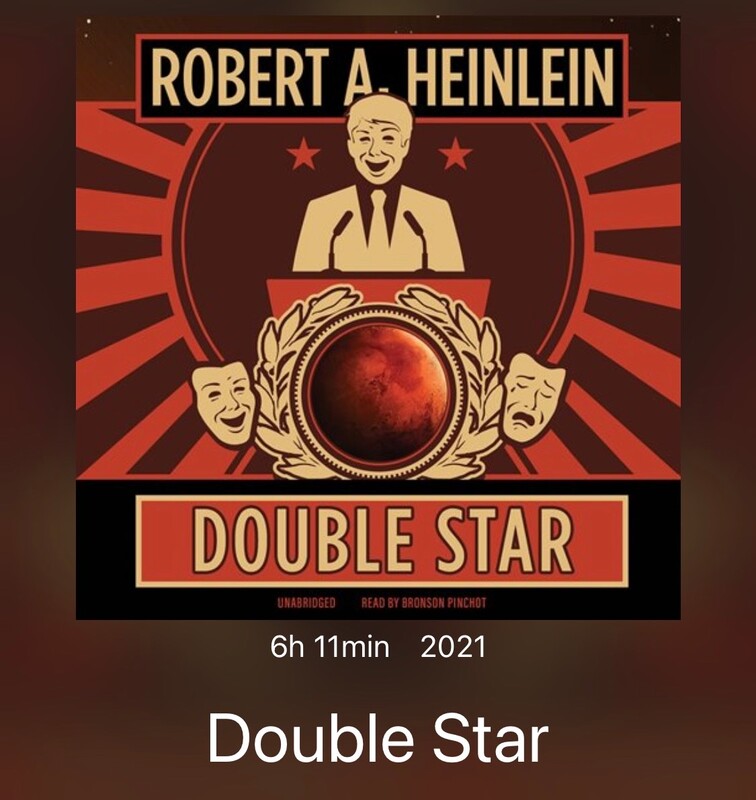 ’Norse Mythology’ by Neil Gaiman - 5/5In 'Norse Mythology', Neil Gaiman skillfully brings ancient Norse tales and legends to a modern audience, offering an accessible and enthralling experience. As someone who shares Gaiman's love for Norse mythology, this book struck a familiar chord and brought back cherished memories of my youth spent creating home videos of Norse myths with family and friends. Filming with an old camcorder in backyards and local parks, we had a ton of fun and brought these timeless stories to life, just as Gaiman does with his vivid storytelling. I recommend this book for both enthusiasts and newcomers to Norse mythology. 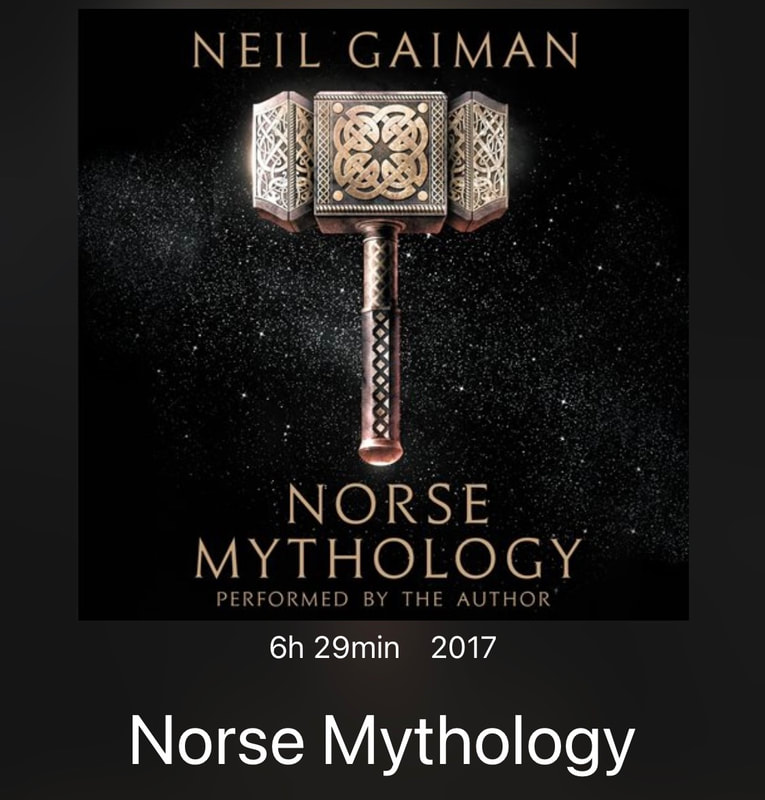 ‘The Butcher and the Wren’ by Alaina Urquhart - 4/5'The Butcher and the Wren' by Alaina Urquhart is a riveting debut that weaves the dueling perspectives of a cunning serial killer and an astute medical examiner into a chilling, gripping Louisiana bayou thriller.  ‘A Rover’s Story’ by Jasmine Warga - 4/5‘A Rover's Story’ by Jasmine Warga is a charming tale that intertwines the adventures of Resilience, a personified Mars rover, and Sophie, a girl whose mother contributed to the rover's creation. Inspired by real-life rovers Curiosity and Perseverance, the novel blends scientific facts with imaginative storytelling. Through letters to Resilience, Sophie's narrative adds a personal touch, enhancing the emotional dimension of the story for readers. This novel is an engaging, educational journey into space exploration. 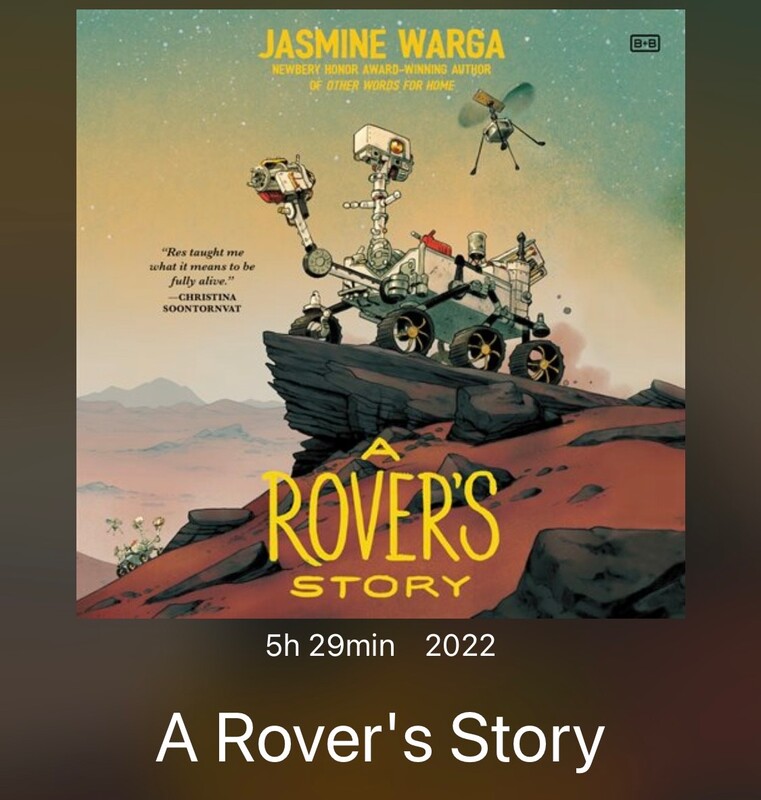 ‘Hekla’s Children’ by James Brogden - 3/5‘Hekla's Children’ by James Brogden is a mixed experience. Its strengths lie in the imaginative world of Un and the compelling depiction of the monster Afaugh. However, the book suffers from inconsistent pacing and narrative engagement. While some characters are believable, others act nonsensically, weakening overall engagement. I wish there was deeper exploration and comparison between the fantastical world of Un and the real Bronze Age. Overall, it's a journey with high points and notable flaws, suitable as an audiobook during a long drive.  ‘How to Win Friends and Influence People’ by Dale Carnegie - 4/5Dale Carnegie's 'How to Win Friends and Influence People' is an insightful book that imparts various principles on interpersonal relations and influence. Through engaging narratives, historical references, and repeated themes, the book provides readers with the following key strategies: Fundamental Techniques in Handling People
Six Ways to Make People Like You
How to Win People to Your Way of Thinking
Be a Leader: How to Change People Without Giving Offence or Arousing Resentment
 As my road trip adventures draw to a close, I’m curious about your long-drive entertainment choices. How do you keep engaged and entertained on the road? Have you recently lost yourself in an audiobook on a long drive? What platforms do you use? Whether it's Hoopla, Audible, or any other app, I'd love to hear about your experiences and discoveries. Share your favourite audiobook titles, the journeys they accompanied you on, and how they transformed your travel time. Let's exchange stories and perhaps find our next great listen in each other's recommendations.
The Art of Being Generous... and CriticalIn my public reviews, I confess to a dual nature: I lean towards generosity when I find redeeming qualities in a book, yet I'm equally forthright in my criticism if a book fails to capture my interest or feels incoherent. This approach is partly strategic, aiming to steer algorithms for better future suggestions, and partly communal, guiding readers towards literary gems and away from less engaging reads. As a result, my public reviews might seem a bit more polarized, accentuating the positive or negative aspects more distinctly. The Role of EngagementEngagement is key in my rating system. A book that consistently holds my attention usually earns a higher rating. If, however, I find my mind wandering due to weak plot development, lack of relatability, poorly written characters, or excessive detail, it tends to lower the book's rating. Audiobooks, which I often enjoy on road trips, have a slightly different criterion. They need to be engaging enough to keep me focused, yet accessible enough to allow for intermittent attention. That way I can smoothly re-enter a story after brief distractions. The ideal audiobook is concise and captivating, preferably under 12 hours, with around 6 hours being the sweet spot. This length allows for a thorough story that can typically be consumed in 1-3 sittings, making it perfect for road trips. Exceptional audiobooks I've already read and loved can extend beyond this limit as they allow for easy re-engagement due to prior knowledge of the story. Redundancy and Relevance in Non-FictionI approach non-fiction with a critical eye. Books that are repetitive or drift off-topic receive lower ratings. However, those that align with my current interests, delve deep into topics, and assume some level of pre-existing knowledge are highly favoured. Book Clubs and Gifted Books
The 3-5 Star SpectrumMost of my ratings fall between 3 to 5 stars, as I rarely finish books that don't resonate with me. Here's my breakdown:
The 1-2 Star Range
The Exceptional 5-Star Plus
Your Thoughts?Now, I turn to you, fellow readers. How do you rate books on Goodreads or other platforms? Do you review differently in public compared to your private musings? Is there a special tier in your heart for books that transcend the 5-star limit? I'm eager to hear about your rating philosophies and how they shape your reading journey. Share your experiences and recommendations in the comments below. Happy reading!
Welcome to the sixth and final week of my series on enhancing public library services for individuals experiencing homelessness. Today, we delve into the critical role of community collaboration. No library operates in isolation. Developing partnerships with local shelters, social services, and other community organizations is essential. These collaborations not only extend the library’s reach but also enrich its services and cement its role within the community. Understanding the Value of Partnerships
Identifying Potential Partners
 Generated with DALL·E. Building Effective Partnerships
Collaborative Programs and Services
 Generated with DALL·E. Measuring Impact
Celebrating Successes and Sharing Stories
As we close this series, it's clear that community collaboration is more than just a strategy; it's a necessity for public libraries aiming to effectively serve all community members, especially those experiencing homelessness. By forging strong, mutually beneficial partnerships, libraries can enhance their services and play a pivotal role in the community, building bridges that extend far beyond their walls.
Welcome to week five of my series on enhancing public library services for patrons experiencing homelessness. In the realm of public libraries, the well-being and empowerment of library staff is paramount. This blog post discusses the importance of robust training programs, support systems, and feedback mechanisms, all aimed at equipping library staff with the necessary tools and confidence to maintain a calm and inclusive library atmosphere. Comprehensive Training Programs
Build Robust Support Systems
 Generated with DALL·E. Effective Feedback Mechanisms
Foster a Culture of Continuous Learning
Recognize and Reward Efforts
Empowering library staff through comprehensive training, robust support systems, effective feedback mechanisms, and recognition of their efforts, not only enhances their professional skills but also nurtures their well-being and improves job satisfaction. This holistic approach ensures the library remains a place of calm, inclusion, and effective service, where both staff and patrons feel valued and understood. Let's continue to invest in our team, the heart of our library, to make a meaningful impact in the lives of all who walk through our doors.
|